

 Español
 عربى
عربى русский
You don't notice it. But every time you walk across a kitchen, a retail store, or an office lobby, you step on a floor. A stone-plastic composite board is designed to handle foot traffic, moisture, and daily wear. An SPC board factory produces these rigid planks—the ones that lock together, resist scratches, and stay flat year after year. They're not the soft vinyl sheets of the past. They're not laminate with wood pulp inside. These are the floors that survive spills, rolling chairs, and high heels without buckling or swelling.
What an SPC Board Does
It provides a waterproof, dimensionally stable surface
An SPC board is made with a limestone-based core that doesn't absorb water. An SPC board factory produces boards that stay flat even when the subfloor is damp or the room has wide temperature swings. The core doesn't expand, contract, or warp. The board keeps its shape from installation day to years later.
It handles heavy foot traffic without visible wear
Shopping malls, school corridors, and hotel lobbies see thousands of steps per day. An SPC board factory produces boards with a thick wear layer—often 0.3 mm to 0.7 mm—that resists scuffs, stains, and indentations. The decorative film sits beneath a transparent coating that takes the abuse. The pattern doesn't fade. The surface doesn't scratch from dragged furniture or pet claws.
It offers a rigid click-lock edge for fast installation
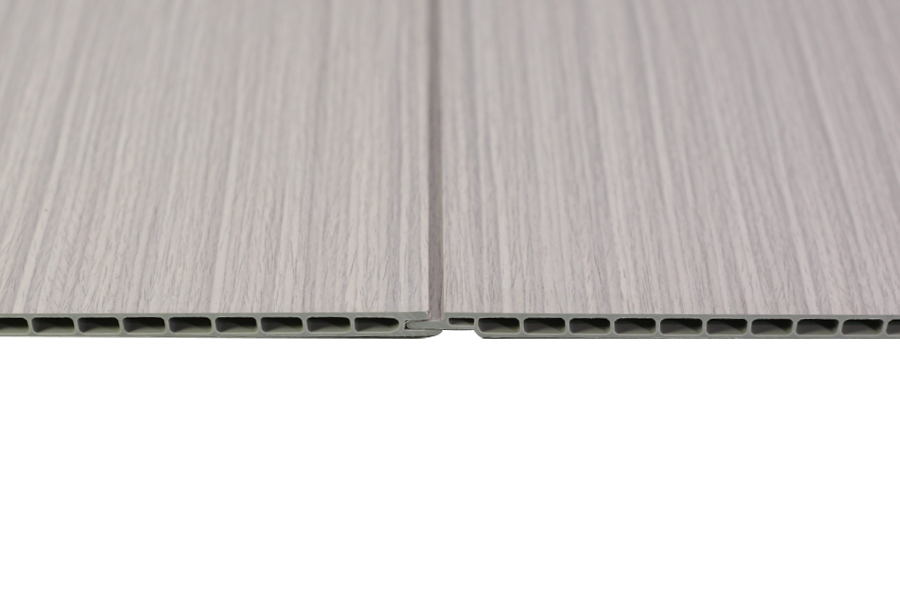
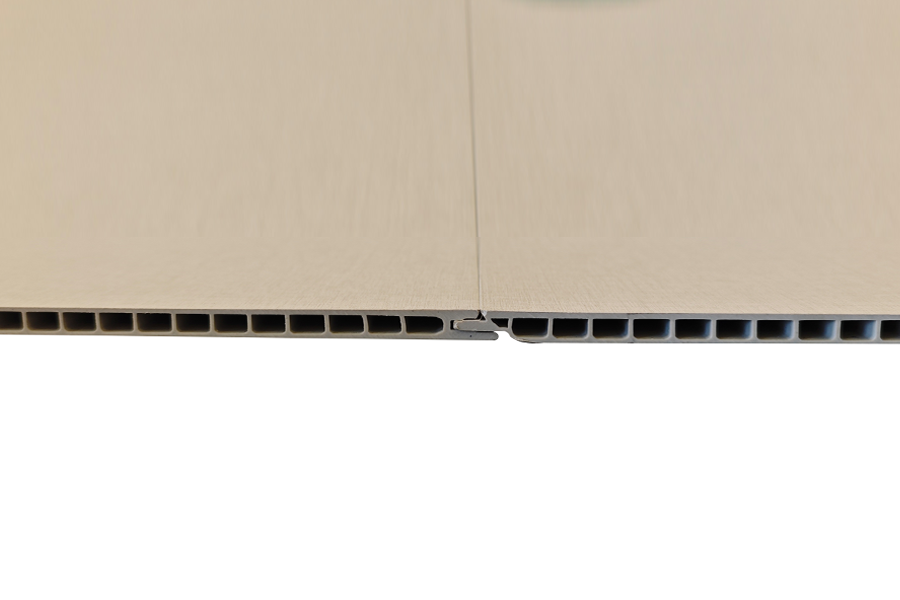
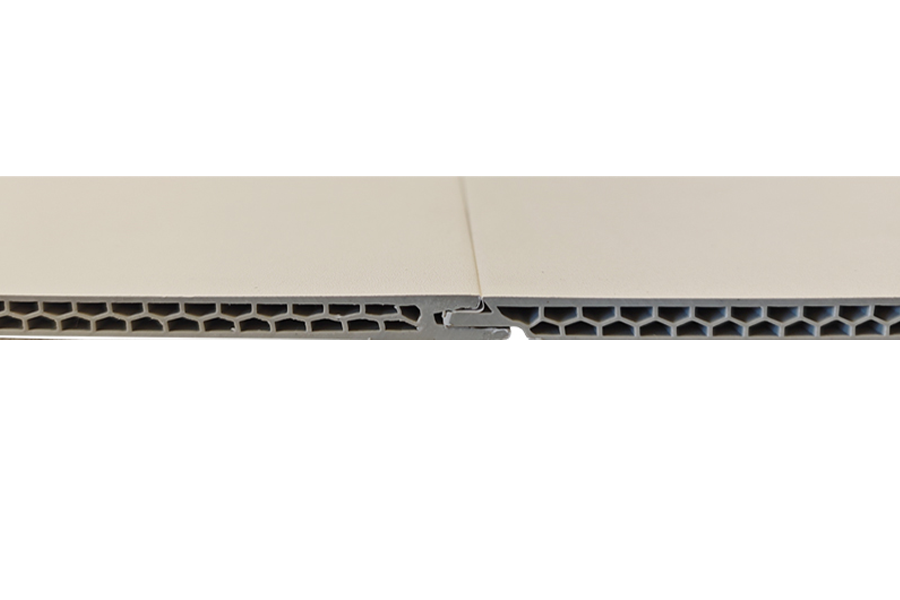
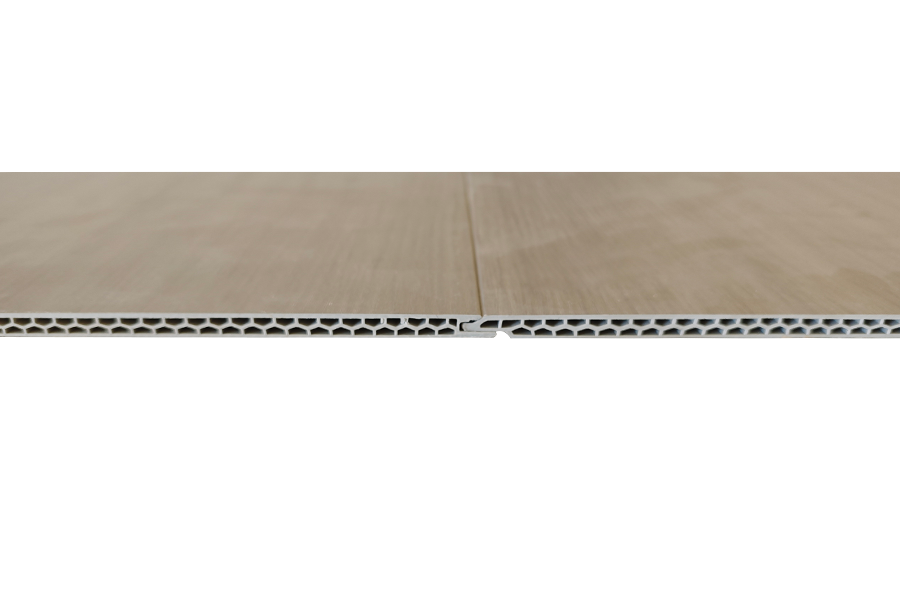
The installer aligns the tongue, angles the plank, and snaps it down. An SPC board factory produces boards with precision-milled edges that lock securely without glue. The joint stays tight. The floor doesn't separate over time. The installation goes fast, and the floor is ready for use the same day.
What Goes into an SPC Board
The core contains limestone powder and PVC resin—no wood, no glue
The core is the backbone. An SPC board factory uses a blend of calcium carbonate (around 60–70% by weight) and virgin or recycled PVC. This combination creates a dense, rigid panel that resists compression. The core doesn't swell when wet. It doesn't off-gas like some urethane-based products. The density typically ranges from 1.9 to 2.1 g/cm³.
The decorative film gives it the look—wood, stone, or tile
The design is printed on a high-resolution film. An SPC board factory sources films from specialty printers who match wood species, marble veins, or concrete textures. The film is fused to the core under heat and pressure. The result is a surface that looks like natural material but without the maintenance or cost.
The wear layer protects the print from damage
Above the decorative film sits a clear urethane or ceramic-infused coating. An SPC board factory applies this layer in controlled thickness. The wear layer:
- Resists scratches from shoes and pet nails;
- Repels stains from coffee, wine, and oil;
- Maintains gloss level from matte to high-shine over years of cleaning.
- The attached underlayment reduces noise and improves comfort
Many boards come with a pre-attached foam or cork backing. An SPC board factory offers options with IXPE (cross-linked polyethylene) or EVA foam. The underlayment absorbs impact sound, makes the floor warmer underfoot, and smooths out minor subfloor imsuperbions.
Where SPC Boards Are Used
Residential kitchens, bathrooms, and basements
Homeowners choose SPC for wet areas. An SPC board factory supplies boards that go directly over concrete, tile, or existing vinyl. No underlayment needed if the board has it attached. The floor handles splashes, humidity, and occasional flooding without damage. It's also compatible with radiant heating systems.
Commercial retail stores and showrooms
Foot traffic is constant. An SPC board factory produces boards with thicker wear layers (0.5 mm or more) for commercial use. The floor stays presentable with routine sweeping and mopping. No waxing. No polishing. The boards are also resistant to static electricity, making them suitable for electronics showrooms.
Hospitality and healthcare facilities
Hotels and clinics need quiet, hygienic floors. An SPC board factory supplies boards with acoustic underlayment that reduces impact noise between floors. The surface is easy to sanitize—bleach and mild detergents don't damage the wear layer. The boards are phthalate-free in many formulations, meeting indoor air quality standards for sensitive environments.
Office spaces with rolling chairs and movable partitions
Office floors take a beating from casters and desk legs. An SPC board factory produces boards with high indentation resistance (often over 1,000 psi). The planks don't dent under heavy filing cabinets or conference tables. The click-lock edges stay aligned even when partitions are rearranged.
What to Look For
Wear layer thickness
The wear layer determines how long the floor looks new. An SPC board factory prints the wear layer spec on the packaging. For residential use, 0.2 to 0.3 mm is adequate. For commercial, look for 0.5 mm or higher. Some factories also test to abrasion class ratings—AC4 for heavy traffic, AC5 for extra-heavy.
Core density and thickness consistency
The core has to be uniform. An SPC board factory controls density throughout the production run. Ask for the density specification and thickness tolerance, typically within plus or minus 0.1 mm. Boards with inconsistent density feel spongy underfoot or warp near edges.
Locking system and edge quality
The lock has to engage cleanly. An SPC board factory uses precision steel dies to mill the tongue and groove. Check if the lock is a drop-lock style for angled installation or a fold-down type for faster large-area work. Both work, but fold-down systems save time on big jobs. The edges should be smooth—no frayed fibers or chipped corners.
Certifications
The board should meet safety and performance standards. An SPC board factory provides documentation for formaldehyde emission, slip resistance, and indoor air quality. Look for FloorScore, GREENGUARD, or similar labels. Warranty coverage typically runs 15 to 25 years for residential use and 5 to 15 years for commercial.
An SPC board factory produces the rigid flooring that handles real life—water, traffic, furniture, and time. The core, the film, the wear layer, and the lock determine how well the floor performs. Choose a factory with tight process control, clear specs, and tested materials. That's what makes an SPC floor you can install once and forget about for decades.