

 Español
 عربى
عربى русский
Purpose of Soffit Panels in Building Ventilation
Soffit panels are installed under the eaves of a roof, bridging the gap between the exterior wall and the roofline. Their primary function is to close off the underside of the roof overhang while allowing attic ventilation. Unventilated attics accumulate heat (temperatures reaching 60-70°C in summer) and moisture (condensation forming on roof sheathing). Continuous soffit ventilation, combined with ridge or gable vents, creates a natural airflow path: cool air enters through the soffit, rises through the attic, and exits at the roof peak. This airflow reduces attic temperature by 10-20°C compared to unventilated spaces and lowers humidity by 15-25 percent. PVC (polyvinyl chloride) soffit panels are popular because they do not rot, warp, or absorb moisture like wood or fiber cement.
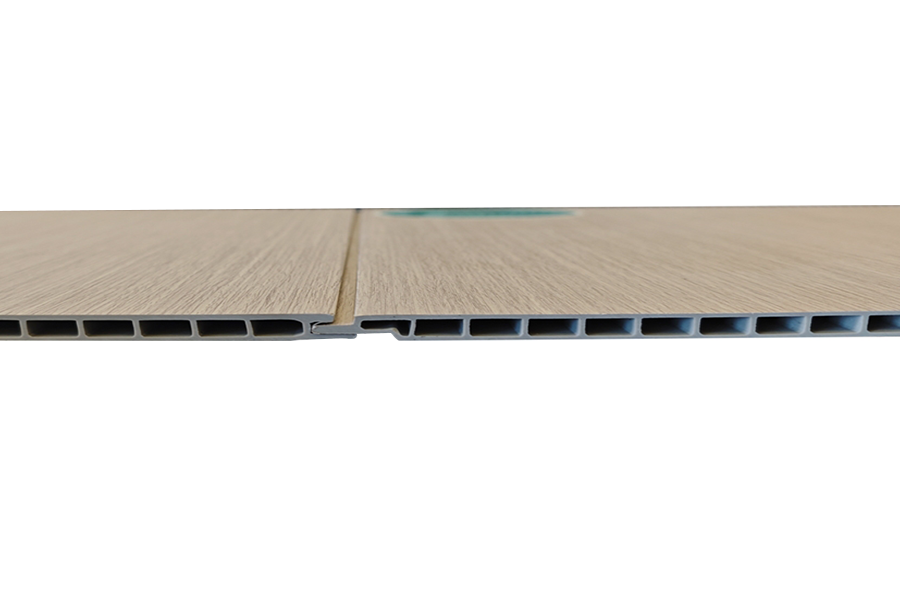
A typical PVC soffit panel has a thickness of 0.8-1.2 mm and is available in solid (no holes) or vented (with perforations) forms. The vented panels have hole diameters of 2-5 mm, spaced 8-12 mm apart, providing 8-15 percent open area for airflow. Building codes in most regions (e.g., International Residential Code, Section R806) require 1 square foot of net free ventilation area per 150 square feet of attic floor space. Using vented soffit panels contributes to meeting this requirement.
Material Composition and Weather Resistance
PVC soffit panels are made from virgin or recycled PVC resin compounded with stabilizers (calcium-zinc or organotin, 1-3 percent), impact modifiers (acrylic or chlorinated polyethylene, 2-5 percent), fillers (calcium carbonate, 5-15 percent), and pigments (titanium dioxide for white panels, 4-8 percent). The titanium dioxide provides UV resistance by absorbing ultraviolet light (290-400 nm) and converting it to heat. A panel with 6 percent titanium dioxide maintains its color for 10-15 years of outdoor exposure; panels with lower titanium dioxide content (2-4 percent) yellow or fade within 3-5 years. The impact modifier prevents the panel from cracking at low temperatures (below 0°C).
A panel without sufficient impact modifier becomes brittle: a 1 kg weight dropped from 1 meter will crack the panel at -10°C. The linear thermal expansion coefficient of PVC is 5-7 × 10⁻⁵ mm/mm°C, which is 3-4 times higher than aluminum or steel. A 3-meter PVC panel installed at 10°C expands by 6-8 mm when the surface temperature reaches 50°C on a sunny day. The panel must have expansion gaps (2-3 mm between panels and at ends) to prevent buckling. The manufacturer's installation instructions specify the required gap; ignoring it causes the panels to warp (visible as waves or bulges) after the first summer.
Installation Methods and Fastener Selection
PVC soffit panels are installed over a wooden or metal substrate (1x4 or 2x4 furring strips spaced 400-600 mm apart). Two installation methods are common. The hidden fastener method uses a J-channel or F-channel trim at the wall and the fascia board. The panel slides into the channels, and nails are driven through the panel's nailing hem (the thickened edge of the panel). The nail heads are concealed by the next panel. This method allows the panel to expand and contract freely because the nails are not tight against the panel (a 1-2 mm gap is left under the nail head). The surface-mounted method uses visible fasteners (screws or nails) through the panel face into the substrate.
This method is faster but may look less finished. The fasteners must be corrosion-resistant (stainless steel 304 or 316, or hot-dipped galvanized with 20-30 micron coating). Zinc-plated drywall screws rust within 6-12 months of outdoor exposure, leaving brown stains on the panel. The fastener length should penetrate the substrate by at least 20 mm. For a 1.0 mm panel plus a 25 mm furring strip, use 35-40 mm long fasteners. Over-driving the fastener (compressing the panel) prevents thermal expansion and causes the panel to crack at the fastener hole (stress crack starting at the hole edge, propagating 5-10 mm over 1-2 years). The fastener should be driven until the head contacts the panel surface, then backed off one-quarter turn to allow movement.
Maintenance and Cleaning
PVC soffit panels require minimal maintenance. Dust and cobwebs accumulate on the underside of the overhang, especially in rural areas. Clean the panels annually with a garden hose and a soft-bristle brush (nylon, not steel). For stubborn stains (bird droppings, tree sap, exhaust soot), use a solution of 10 percent mild detergent (dishwashing liquid) and 90 percent water. Do not use abrasive cleaners (scouring powder, steel wool) or solvents (acetone, toluene, paint thinner); they scratch the surface or dissolve the PVC. A scratched panel becomes a dirt magnet (the rough surface retains dust). If the panel has a gloss finish (60-70 percent gloss at a 60-degree angle), a matte finish (20-30 percent gloss) shows less dirt over time. High-gloss panels look clean when new but show every fingerprint and water spot; low-gloss panels hide minor imperfections.
For panels with mold growth (black or green spots, common in humid climates or shaded north-facing eaves), wash with a solution of 30 percent white vinegar and 70 percent water. The vinegar kills mold spores (acetic acid concentration 5 percent, diluted to 1.5 percent in the solution). Bleach (sodium hypochlorite) also kills mold but may yellow the panel over time (chlorine attacks the UV stabilizers). Rinse thoroughly with water after cleaning. If the panel has vent holes, insert a pipe cleaner or small bottle brush into each hole to remove debris that blocks airflow. A blocked vent hole reduces attic ventilation; 30 percent of holes blocked reduces airflow by 50-60 percent because the remaining holes must pass the same volume at higher velocity, creating back pressure. The vented area should be checked every 2-3 years for insect nests (wasps, mud daubers) that completely block holes. A nest the size of a golf ball (5 cm diameter) can block 20-30 vent holes. Remove nests with a long stick or compressed air (0.3-0.5 MPa) after wearing gloves and eye protection.